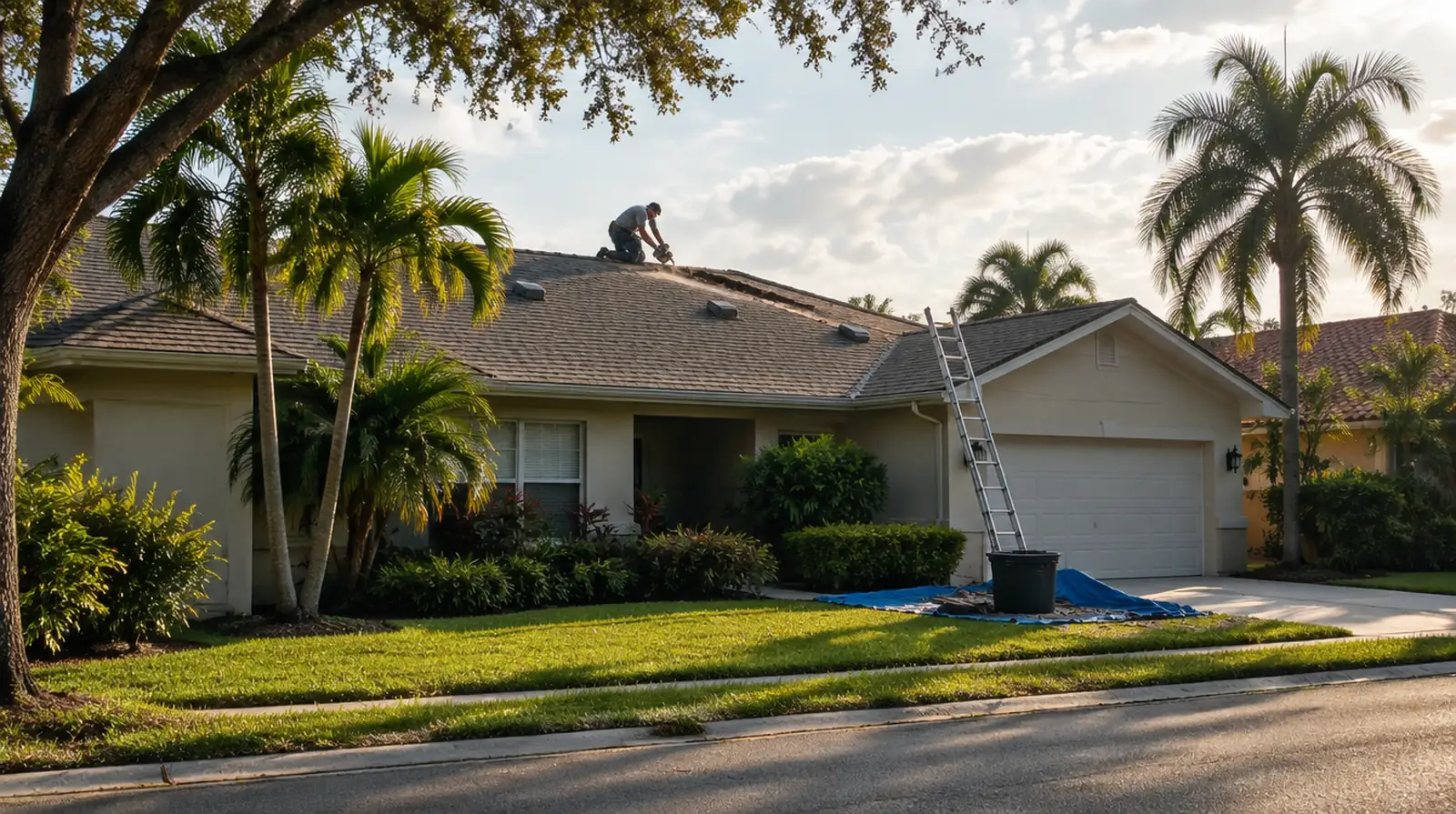
How roof ventilation works
A ventilated attic pulls cooler air in at the eaves through soffit vents and lets warm, moist air out near the peak through ridge vents or other exhaust. When this flow is balanced, the attic stays closer to outdoor temperature, moisture does not linger, and the roof deck and shingles are not baked from below.
Many older ranch homes in Plantation were built with limited ventilation. Over time, insulation upgrades sometimes covered soffit vents, and additions may have blocked airflow paths. The result is an attic that runs hot and damp.
Signs you need better roof ventilation
- Extreme attic heat on sunny days
- Musty smells or mildew on the underside of the decking
- Rust on nail tips poking through the roof deck
- Shingles aging faster than expected
- Rooms under the roof that stay warm in the evening
How we improve ventilation
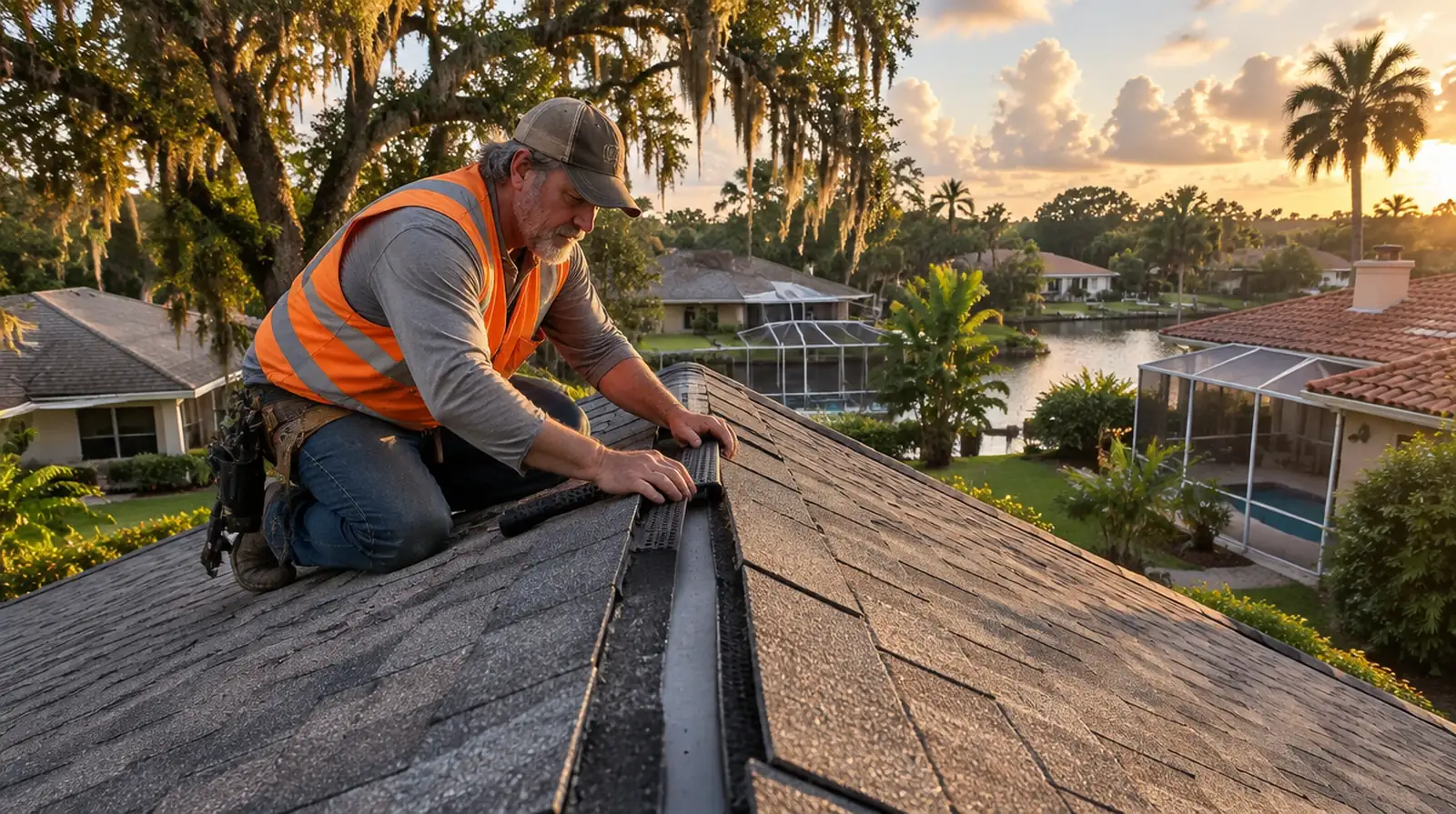
We start in the attic to see how much intake and exhaust you have and whether insulation is blocking the eaves. Then we design a system that moves air from soffit to ridge.
A continuous ridge vent is often the cleanest exhaust option on shingle roofs and is easiest to install during asphalt shingle replacement. At the eaves, we open or add soffit vents and install baffles that keep insulation from blocking airflow. On tile or mixed roofs, we use vent products designed for those materials. Better airflow helps with heat and moisture, but it does not fix leaks; for that, see our leak repair service.
Balance matters more than vent count
Adding exhaust without enough intake can pull conditioned air out of your home through ceiling gaps. Mixing different types of exhaust, such as a ridge vent and gable fans, can short-circuit the airflow so parts of the attic stay stagnant. We aim for one clear path from the eaves to the peak.
Ventilation and humidity in Plantation attics
South Florida air carries a lot of moisture, and household activities add more. In an attic without good airflow, that moisture condenses on cooler surfaces overnight, especially on the decking. Over months and years, that leads to stained wood, rusted fasteners and mold. Good ventilation, along with sealing gaps around ceiling fixtures and the attic hatch, keeps the attic drier and protects the roof structure.
When to add roof ventilation
The ideal time to correct ventilation is during a re-roof, when the deck and ridge are open and we can cut a continuous slot for a ridge vent. But many fixes work on an existing roof. Opening painted-over soffits, adding baffles at the eaves and installing additional exhaust can all be done as separate projects. If your roof is still in good condition, these upgrades can help it last longer and make the attic easier to live with.
Ventilation on single-story ranch homes
Long, low ranch roofs present a specific challenge. The attic space is often shallow, with insulation packed close to the eaves and a long ridge that may only have a few small vents. That combination traps heat along the length of the house. Adding continuous soffit intake and a ridge vent that runs most of the roof's length usually solves it, as long as baffles keep insulation clear of the airflow path at the edges.
Roof ventilation FAQs
Will better ventilation reduce my energy bills?
A cooler attic means less heat entering the rooms below, which can help. The effect depends on insulation and ductwork too.
Can ventilation be added without a new roof?
Yes. Many improvements, such as opening soffits and adding vents, can be made on an existing roof.
Should I add a powered attic fan?
Powered fans can create problems when intake is limited. We usually start with passive ventilation.
Does an addition need its own ventilation?
Often yes, especially if the addition's roof space is separate from the main attic.
Want the attic to breathe?
Call (954) 932-9125 for a roof ventilation look and estimate.