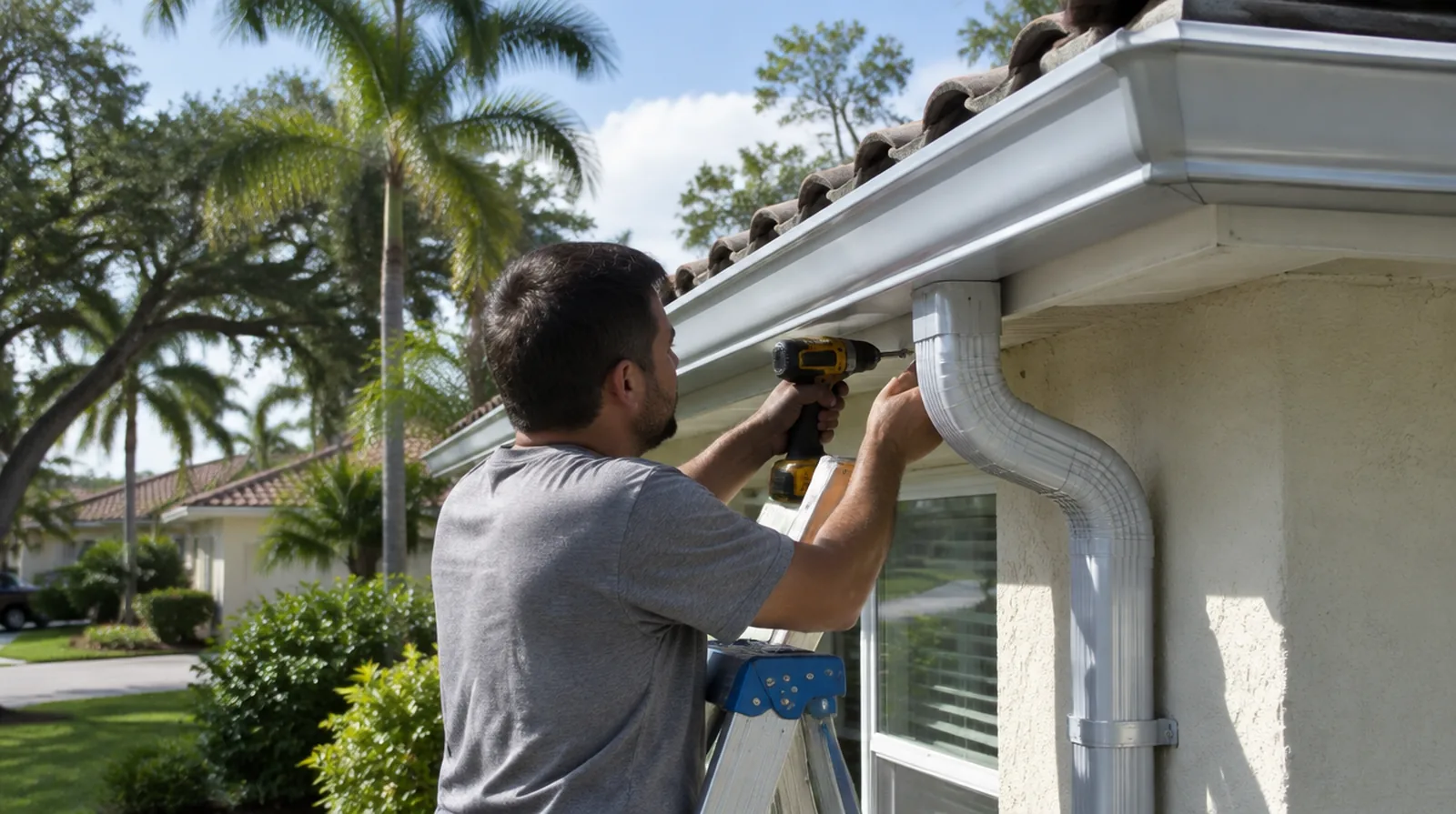
Why gutter installation helps Plantation homes
A lot of older ranch homes were built without gutters, or with only short sections over doors. Wide eaves help, but heavy rain still pours off the edge in sheets. That water splashes dirt onto siding, erodes flower beds, wears grooves in the lawn and collects near the foundation. Over time it can stain and damage walls and fascia boards.
Gutters also matter under trees. Live oaks and other shade trees drop a steady stream of leaves, and without gutters that debris ends up mixed with runoff along the house. With gutters and the right guards, you control where both water and debris go.
How we install gutters
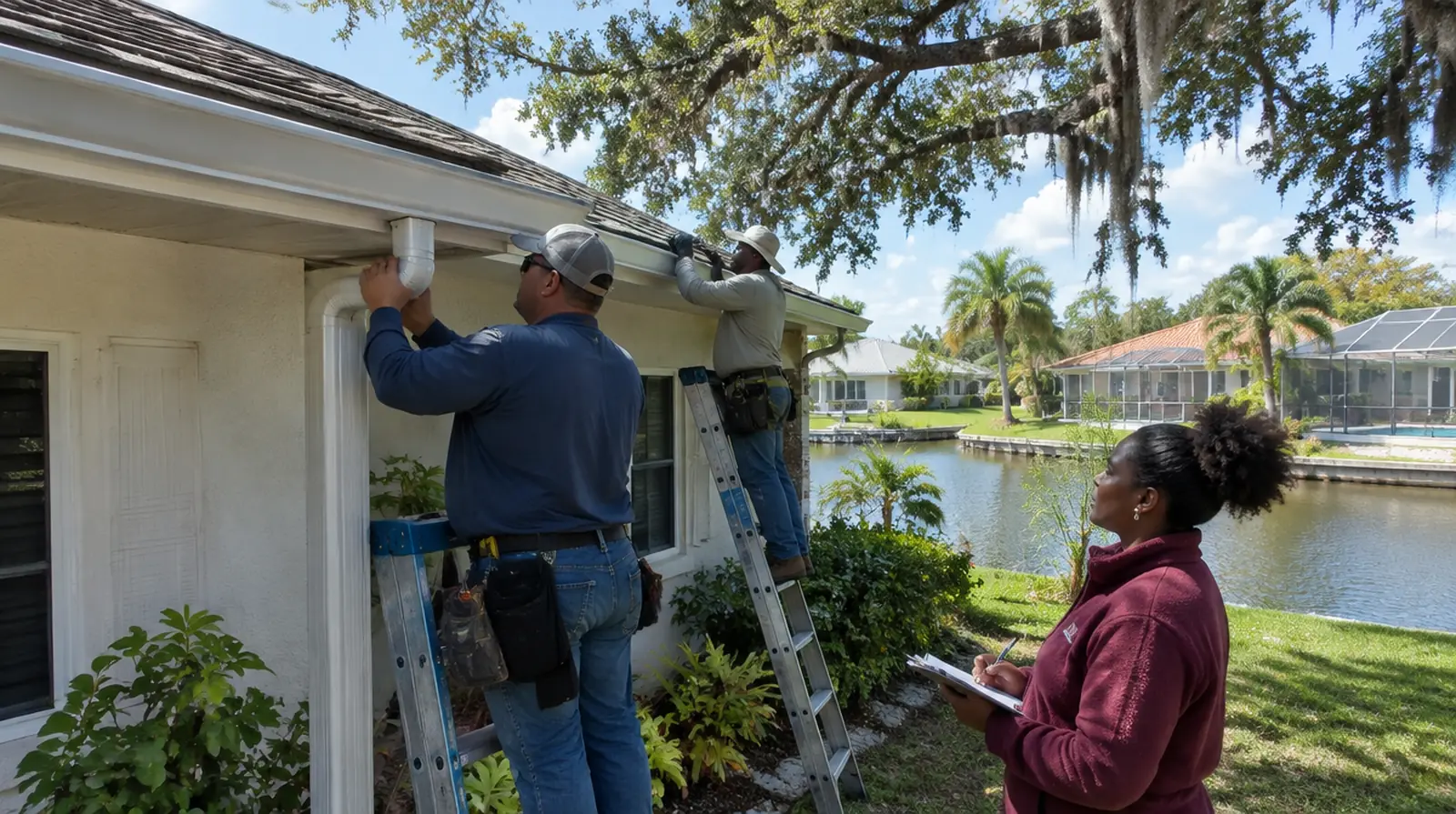
We start by looking at where water currently lands and where it should go. Then we plan the gutter runs and downspout locations so water is carried away from entries, patios and pool areas. Seamless aluminum gutters are formed on site to the exact length of each run, which means fewer joints and fewer leaks.
We fasten hidden hangers into the fascia at close intervals so the gutters stay secure in wind and heavy flow. Slope is set so water moves toward the outlets. Downspouts are attached and directed onto splash blocks, extensions or into existing drains. If fascia boards are rotted, we point that out first so they can be repaired before the new gutters go up. When a roof is near the end of its life, it can make sense to coordinate gutters with a roof replacement so new edge metal and gutters are installed together.
Sizing and style choices
Larger gutters and downspouts handle heavy rain better and are less likely to overflow in a strong burst. For homes with big roof spans or valleys that concentrate water, we may recommend oversized gutters on certain runs. Colors are available to match trim, siding or stucco.
- Seamless runs that reduce leak points
- Downspouts placed away from doors and walkways
- Hidden hangers for a clean profile
- Optional guards for homes under heavy tree cover
Gutter maintenance under Plantation's trees
Even with guards, gutters need occasional attention, especially under oaks and palms. Checking and clearing them before the rainy season and after major storms keeps water flowing. Downspouts should be flushed if water starts spilling over the top of the gutter near an outlet. Guards reduce how often you need to clean, but they do not eliminate it entirely.
Downspouts and where the water goes
Gutters collect water, but downspouts decide where it ends up. In Plantation, many lots are fairly flat and the soil can stay saturated after storms, so we think carefully about discharge points. Extensions can carry water a few feet out to a lawn that drains well. Splash blocks protect against erosion. In some cases, downspouts can be tied into existing yard drains. We avoid directing water toward walkways, driveways or a neighbor's yard, and we keep outlets clear of irrigation heads and lighting.
If you have a canal-side or lakefront lot, we also look at how runoff crosses the yard toward the water so it does not wash out beds along the way.
Pairing gutters with roof work
When we see staining on fascia or rot at the roof edge during a gutter visit, we explain whether it needs attention before the gutters go up. Fixing those boards first gives the new system a solid base and protects the roof edge too.
Gutter installation FAQs
Can gutters be added to an older house?
Yes, as long as the fascia is in good condition. We check it before installing.
Do gutters cause roof damage?
Properly installed gutters protect the roof edge. Clogged gutters can cause water to back up, which is why maintenance matters.
Can you add gutters to just part of the house?
Yes. Some homeowners start with entries and valleys and add more later.
What color options are there?
Seamless aluminum comes in a range of colors, and we will help you match your trim or siding.
Need new gutters?
Call (954) 932-9125 for a free gutter installation estimate.