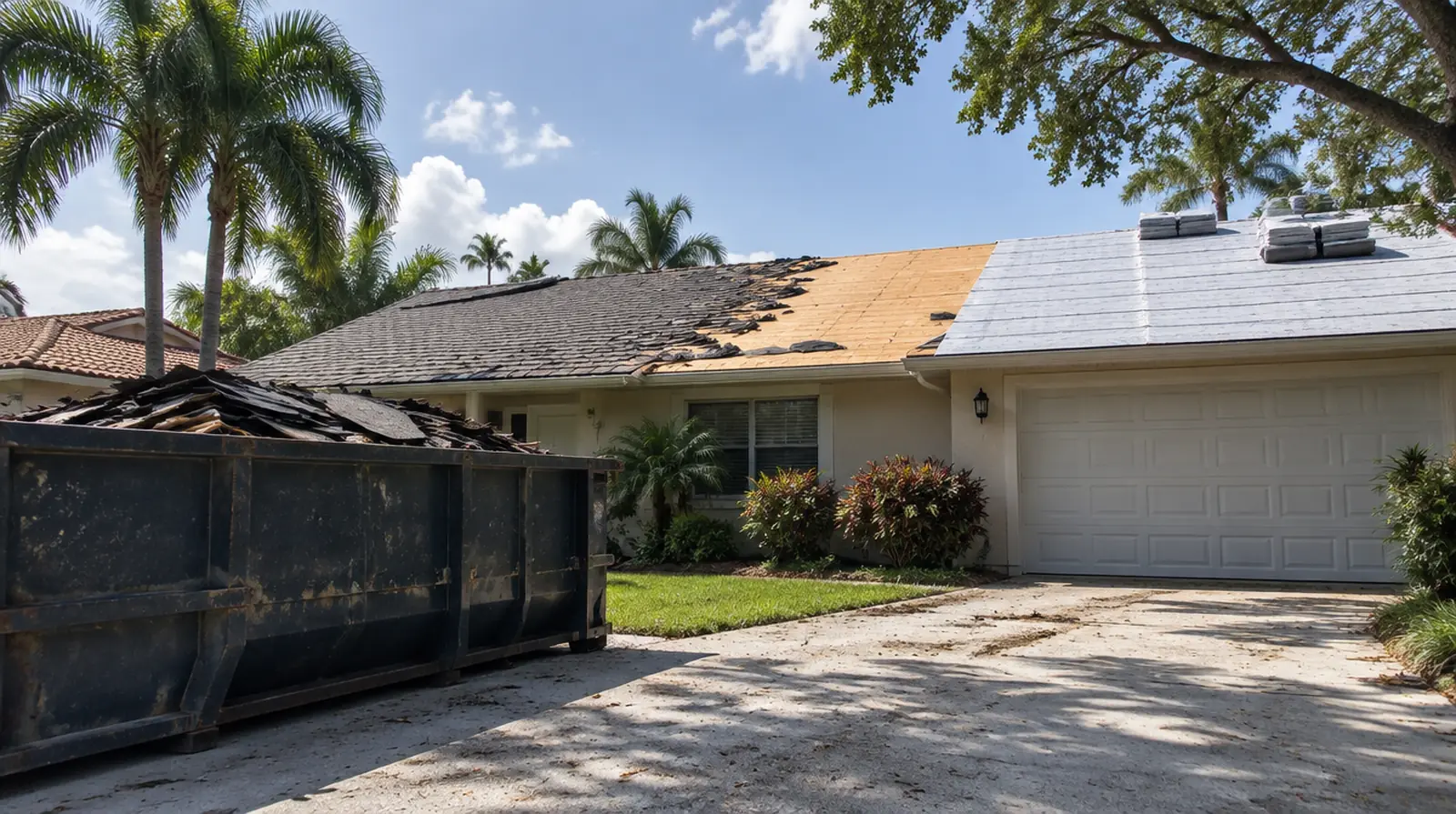
Is it time for a roof replacement?
Many homes in Plantation have reached the age where their current roof was installed one or two decades ago. Asphalt shingles here face a lot of sun and storm wear, and low-slope sections over additions often age even faster. You might be ready for a replacement if:
- Leaks are showing up in more than one room
- Shingles are curling, cracking or missing across several slopes
- The roof feels soft or spongy when walked on
- Granules collect in gutters after every storm
- Repairs keep coming back every season
If you are not sure, a roof inspection will give you a clear answer before you commit.
What happens during a roof replacement
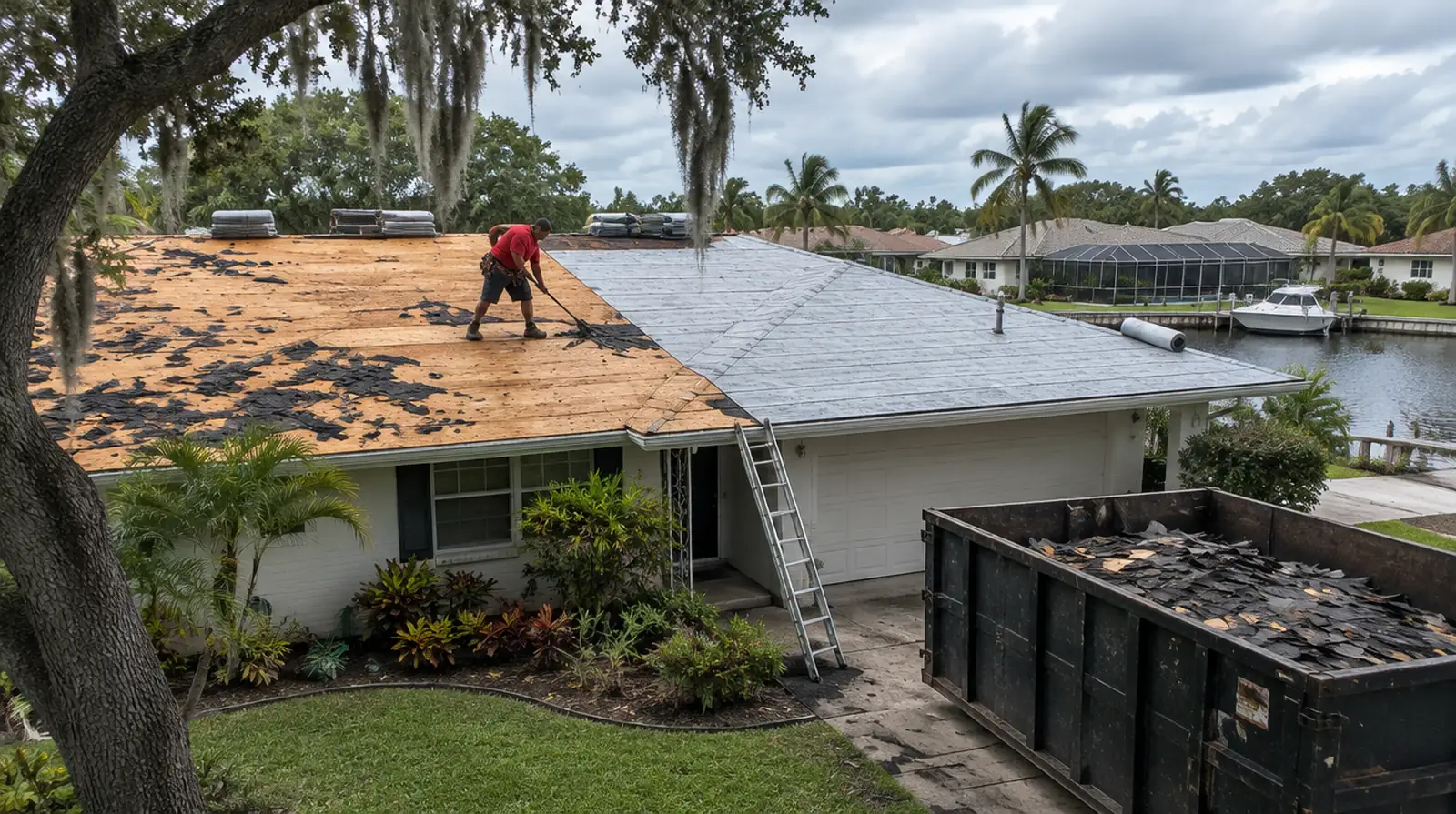
We start by measuring the roof and helping you choose materials, color and any upgrades such as improved ventilation. Permits are filed with the city, and we schedule a start date with an eye on the weather.
On tear-off day, we strip the old shingles, tile or membrane along with the underlayment. We only open as much roof as we can cover the same day, and we keep tarps on hand for sudden storms. With the deck exposed, we check each sheet of plywood. Older homes sometimes have water damage or gaps that need new wood.
Next comes new underlayment, drip edge and flashing at walls, valleys and penetrations. Then the finished roofing goes on, followed by ridge caps and vents. Inspections are completed along the way, and at the end we clean up, run a magnet for nails and walk the roof with you.
Roof replacement on homes with additions
Plantation homes often have a main roof, a family room addition and a porch, each built at a different time. A replacement is the best opportunity to tie those sections together properly. We rebuild the transitions with new flashing, replace worn low-slope membranes at the same time, and make sure water from the upper roof drains cleanly onto the lower one. Doing it all at once means every part of the roof starts fresh together.
Materials for Plantation roofs
Asphalt shingles are the most common choice on the city's ranch homes. Architectural shingles add depth and generally handle wind better than older three-tab styles. Tile appears on newer homes and some remodels, and metal is an option for those who prefer it. For low-slope sections, modern membranes provide a better seal than older built-up roofs. We will explain how each choice works with your home's pitch and style.
What affects roof replacement cost?
- Roof size, pitch and number of sections
- Material chosen
- Amount of deck repair needed
- Number of layers being removed
- Flat or low-slope areas included
Your estimate lists everything clearly, including disposal and cleanup.
Planning the timing of your new roof
Many homeowners prefer to replace a roof during the drier months, when afternoon storms are less frequent and schedules are easier to hold. That is a reasonable plan if the current roof can hold out. If it is actively leaking in several places, waiting several months risks damage to the deck, insulation and ceilings that adds to the final cost. An honest look at the roof helps you decide whether a short-term repair can bridge the gap until a better season.
Cleanup at the end of a roof replacement
Final cleanup includes a magnet sweep of lawn, beds and driveway, removal of all debris, and a last walk around the house with you.
Roof replacement FAQs
How long will the replacement take?
Most homes take a few days, depending on size, material and weather. We give you a schedule up front.
Can you replace just the addition roof?
Yes, if the main roof is still in good shape. We will make sure the new section ties into the old one cleanly.
Will my yard be protected?
We cover plants and walkways, place the dumpster on boards and clean up thoroughly at the end.
What happens if you find rotten wood?
We show you the damage and explain the cost before replacing it, so there are no surprises.
Planning a roof replacement?
Call (954) 932-9125 for a free on-roof estimate and a written scope.